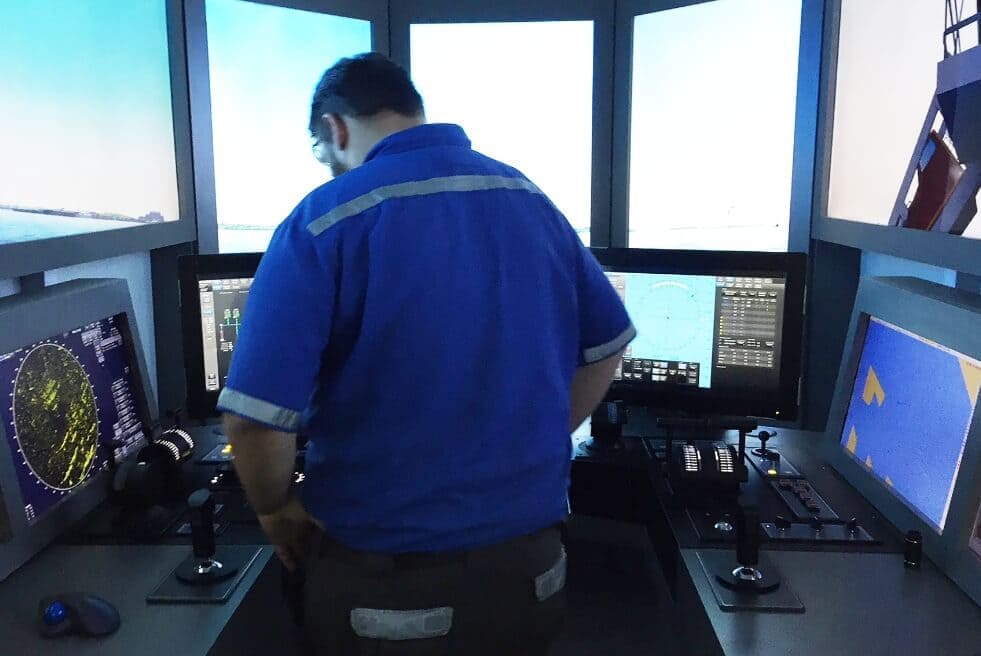
The Complete DP Training Pathway: Courses You Must Take to Earn Your DPO Certificate
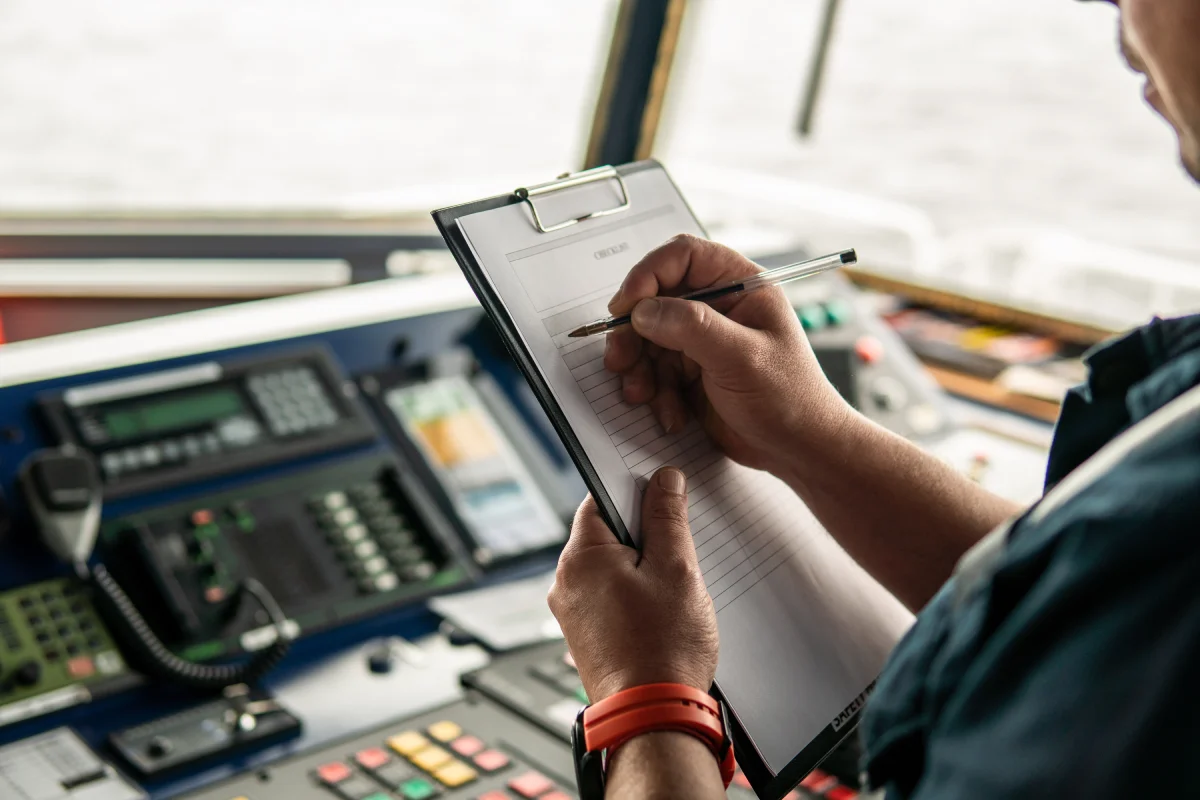
Dynamic Positioning (DP) is a critical technology in the maritime industry, enabling vessels to maintain their position automatically through the integration of thruster and sensor systems. As offshore operations expand globally, the demand for skilled Dynamic Positioning Operators (DPOs) continues to rise.
To qualify for this role, seafarers must follow the complete DP training pathway to earn their DPO certificate through an accredited training centre.
This guide outlines the entire NI-approved route, explains how DP training, assessments, sea time, and simulator practice work, and highlights essential considerations for risk assessment, compliance, and professional development. It aims to be the definitive resource for aspiring DPOs seeking structured certification, competency, and long-term career growth.
Key Takeaways
- DP Certification Requires Five Core Phases — DP Induction, DP sea time, DP Simulator, additional sea time, and a complete competency assessment before applying for the DPO certificate through the Nautical Institute.
- Sea Time + Simulator Training Are Non-Negotiable. You need structured training courses, practical tasks, and supervised operations on DP vessels to demonstrate understanding of DP systems, operations, and the practical aspects of keeping a ship safe.
- Revalidation Matters. DP revalidation ensures that certified DPOs remain well-versed in the latest developments, operational risks, and technical updates affecting DP systems, vessel safety, and offshore business functions.
- Quality of Training Centre Influences Competence. Centres with experienced instructors, vigorous practical exercises, and NI alignment help you identify risks, implement proper procedures, and achieve successful completion of assessments.
Understanding the DP Certification Framework
The DPO certificate is issued through the Nautical Institute (NI) and recognized by the International Marine Contractors Association (IMCA), ensuring global acceptance. NI mandates a structured pathway that blends theory, practice, assessment, and experiential learning.
DP certification validates your ability to:
- Manage a vessel under DP mode
- Execute safe and compliant DP operations
- Perform a structured risk assessment
- Navigate system failures and faults
- Apply operational principles to maintain a vessel’s stability and safety
This rigorous pathway ensures certified DPOs are competent, compliant, and able to support high-risk offshore operations.
Phase A: DP Induction (Basic Course)
The DP Induction, also known as the Basic Course, is the first and most essential step in the complete DP training pathway. This 5-day course builds the foundation for understanding dynamic positioning (DP) and its role in modern maritime industry operations.
High-quality training centres in Singapore and globally, such as Sea Maritime Services, deliver this course in accordance with international standards, including guidance from the International Marine Contractors Association (IMCA).
This phase helps trainees become well-versed in the principles, systems, and compliance requirements that govern DP operations.
Core Learning Outcomes
Trainees will gain a deep understanding of:
- DP systems, including architecture, sensors, reference systems, thrusters, redundancy, and the vessel’s power distribution.
- Environmental forces affecting a vessel’s position, including wind, waves, hydrodynamics, and current.
- Station-keeping logic and practical console manipulations.
- The practical aspects of risk assessment, fault responses, and equipment limitations.
- How DP integrates with the vessel’s business functions, operational planning, and compliance processes.
- Principles of ensuring compliance when managing sensitive information, operational data, and watchkeeping logs.
Assessment
Trainees must pass a formal online examination to demonstrate theoretical knowledge. Upon successful completion, they receive their official NI logbook, where they begin recording their DP sea time and competency development.
Phase B: First DP Sea Time (90Days Onboard Training)
This phase transitions trainees from classroom learning into real-world operations on certified DP vessels. Under the supervision of experienced instructors and certified DPOs, trainees will begin to apply, assess, and implement the knowledge and skills learned during the Induction phase.
Requirements
- Accumulate the required DP sea time (typically part of the 120 days needed across the full training pathway).
- Complete all tasks listed in the NI logbook.
- Participate in supervised DP operations, including:
- Station keeping and the vessel’s position monitoring
- Risk monitoring and decision support
- DP console setup and operational configuration
- Watchkeeping procedures
- Fault observation and documentation
Key Skills Developed
During onboard DP training, trainees will strengthen their ability to:
- Identify risks in real-time operations
- Implement DP procedures accurately
- Conduct an initial risk assessment in dynamic conditions
- Understand how DP integrates with wider vessel operations
- Build operational discipline, situational awareness, and familiarity with complex DP systems
This phase develops practical, hands-on maturity and forms the core of professional growth.
Phase C: DP Simulator (Advanced Course)
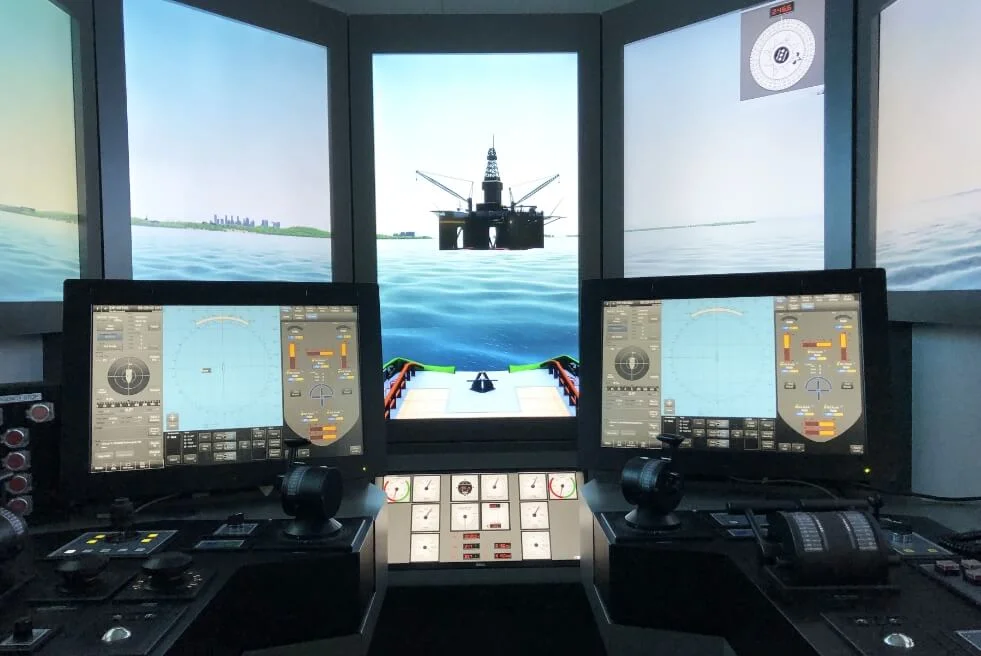
The DP Simulator Course marks the shift into advanced operational competence. Delivered at an approved training centre, it uses a high-fidelity DP simulator to immerse you in complex and high-pressure scenarios while maintaining a safe learning environment.
This is one of the most critical training courses for earning the DPO certificate, as it allows trainees to practice decision-making in scenarios that cannot be safely recreated onboard.
What You Learn
The DP Simulator course covers:
- Advanced alarm handling and multi-system interactions
- Emergency procedures, including power losses and equipment failures
- Environmental changes that impact the vessel’s position
- Operational planning, redundancy concepts, and risk assessment
- Advanced fault-finding and troubleshooting
- High-level coordination between deck, engine room, and bridge teams
- The impact of incorrect configuration and human factors during DP operations
Training centres design courses around practical exercises, scenario-based learning, and simulations that reflect the latest developments in DP technology and risk management.
Assessment
Trainees will undergo a structured competency assessment involving:
- Scenario-based evaluations
- Written examinations
- Performance scoring aligned with NI standards
Upon completing the course, trainees’ logbooks will be endorsed, enabling them to progress to advanced sea-time training.
Phase D: Second DP Sea Time (30 Days -Onboard Consolidation)
This phase consolidates knowledge from the Simulator Course and elevates trainees’ operational independence. This is to prepare them for final certification by enhancing their ability to manage real-time risks, system behaviour, and operational decision-making.
Requirements
- Additional sea time on operational DP vessels
- Completion of all logbook tasks
- Verification and sign-offs by the vessel Master or a certified DPO
- Demonstrated ability to manage DP watchkeeping responsibilities
- Evidence of readiness for competency assessment and final review
By the end of this stage, trainees should be fully capable of handling both routine operations and unexpected incidents, including data-based diagnostics, equipment limitations, and cross-departmental coordination.
Phase E: Suitability Sign-Off & Certification Application
After all training phases, sea-time requirements, and course completion milestones, trainees submit their full portfolio to the Nautical Institute for review.
Required Submissions
- Completed and fully signed NI logbook
- Verified DP sea time records
- Copies of your maritime qualifications
- Signed Statements of Suitability from Masters or senior DPOs
- All course certificates
- Evidence of competence and procedural understanding
Upon approval, NI will issue the official DP certificate, confirming the successful completion of the entire DP training pathway and formally recognizing you as a competent DP professional.
This certification is essential for long-term career progression, including DP revalidation, higher-level DP roles, and specializations across the global maritime sector.
Optional Training Enhancements
These additional courses strengthen a DP professional’s capabilities and help them stay updated with the latest developments, compliance processes, and operational standards.
Sea Time Reduction (STR) Course
A simulator-intensive programme conducted at approved training centres, designed to reduce the total DP sea time required. This option is only available under strict conditions of the Nautical Institute. It is ideal for trainees who demonstrate strong theoretical knowledge, solid practical understanding, and readiness for more advanced, high-fidelity DP scenarios.
DP Refresher & Competency Assessment
Recommended for professionals returning to DP operations or those needing updated knowledge on new practices, system changes, risk management processes, or DP technology advancements. This course reinforces core skills through practical exercises, scenario-based assessments, and system updates, ensuring well-versed and operationally confident.
DP Revalidation
Required every five years to maintain an active DPO Certificate. This process ensures certified DPOs remain competent, aligned with the Nautical Institute’s standards, and capable of managing evolving operational risks. Revalidation may involve simulator assessments, documentation reviews, or updated training components, depending on the trainee’s recent DP experience.
To learn more about these approved DP training courses and certification support, please visit Sea Maritimes Services.
Why Choosing the Right Training Centre Matters
The training centre trainees choose directly shapes their operational readiness, safety awareness, and long-term career growth as a DPO. High-quality maritime training ensures trainees are not only certified but genuinely competent in real-world offshore conditions.
A strong DP training centre should provide:
- Experienced instructors with active industry or offshore backgrounds
- Realistic, high-fidelity DP simulators that mirror actual vessel behaviour
- Robust and transparent assessment standards aligned with IMCA/NI requirements
- Up-to-date curriculum covering new technologies, digitalisation trends, and cybersecurity issues
- Comprehensive academic, operational, and career support
Training partners like SEA Maritime Services ensure trainees develop both theoretical mastery and hands-on operational confidence, meeting the standards expected on modern offshore vessels.
Career Outlook for Certified DPOs
With the expansion of offshore energy, subsea construction, and global shipping, professionals with a valid DPO certificate and strong operational skills remain in high demand.
Certified DPOs gain access to roles requiring:
- Advanced operational decision-making
- Precise vessel positioning and control using DP systems
- Strong understanding of risk management and safety protocols
- Ability to support and execute complex, high-stakes offshore operations
A valid DPO certificate significantly enhances employability across Singapore, Southeast Asia, the Middle East, and Europe, giving professionals stronger global mobility and access to higher-level maritime positions.
Earn Your DPO Certificate Today
Following the complete DP training pathway or courses, you must take to earn your DPO certificate, ensures that you master the principles, simulations, decision-making skills, and operational discipline necessary for dynamic positioning work.
By completing each phase, documenting your sea time, passing each assessment, and maintaining long-term compliance, you establish yourself as a competent, confident, and globally recognized DP professional.
Secure your place in the next intake at SEA Maritime Services — get certified, get recognised, and advance your maritime career now.
Category
Related Article
-
 December 10, 2025
 -
December 10, 2025

Recent Article
-
December 10, 2025
-
December 10, 2025
Popular Article
-
February 20, 2020
-
February 20, 2020
-
February 20, 2020
-
February 20, 2020
-
June 26, 2025